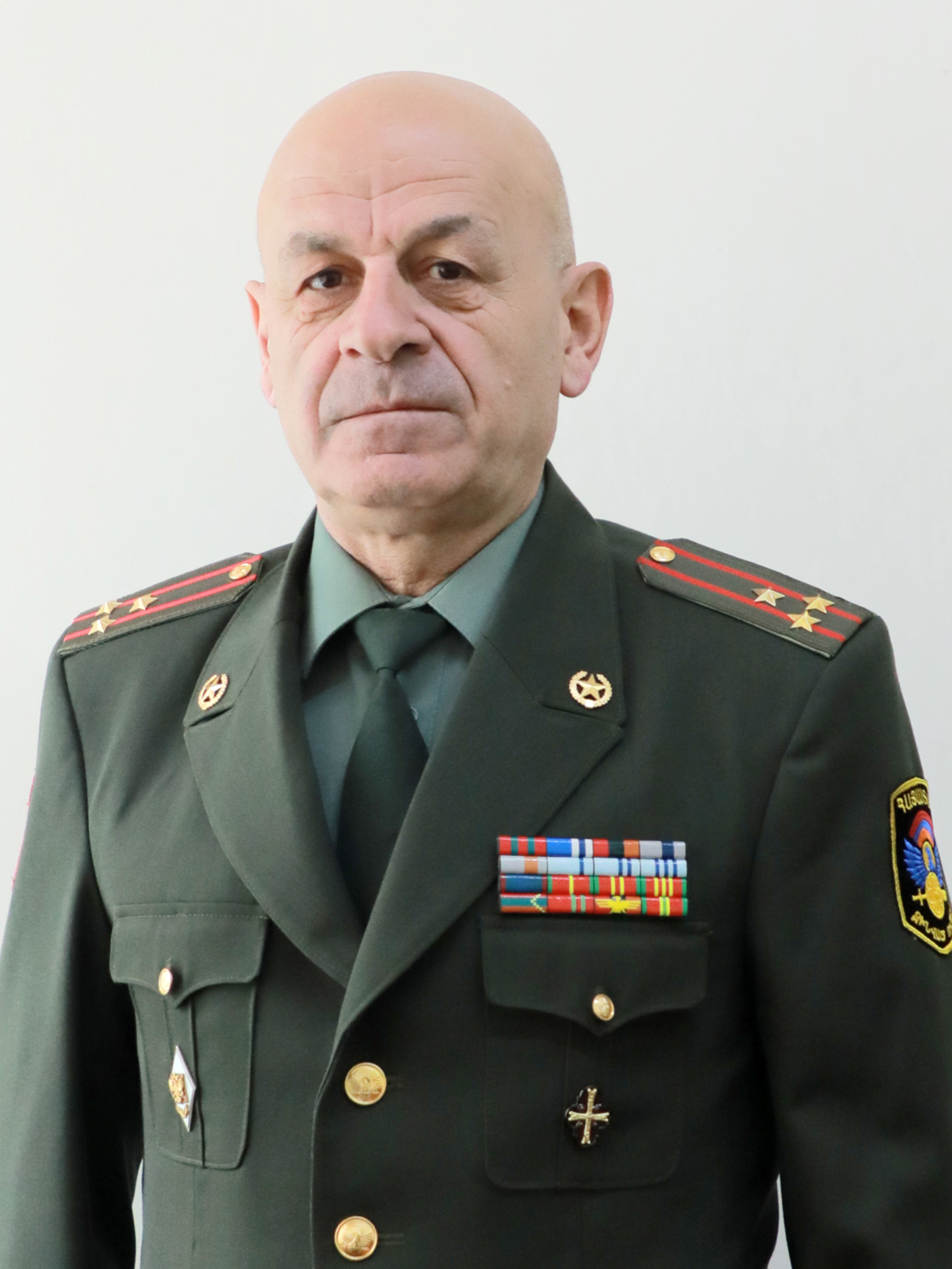
B. M. AGHAJANYAN, Colonel, Head, Center for Military Strategic Studies, INSS, NDRU, MOD, RA
SUMMARY
More than half of the wars which waged amid and post-Cold War era pertain to asymmetric warfare. Those are wars, the parties of which possess completely diverse military capacities, employ strategies and tactics, as well as means and methods for military operations, varying from each other, and in the sphere of international relations act in different statuses.
Among the characteristic features of the asymmetric warfare we can mark out the following: in terms of the applied tactics – guerrilla wars, information warfare, terrorism, the use of geopolitical levers, funding and providing with armaments and military equipment, making use of the civilian infrastructure; in terms of inherent characteristics – force imbalance, exploiting the enemy (the weak party not only uses its strength and the enemy’s weaknesses, but also makes “friction of war” for the latter), the motivation of parties on various degrees, the determination of the weak party to fight till the end; in terms of the ethics – the weak party oversteps all the moral and ethical norms that regulate the conduct of warfare and that most advanced countries adhere to.
Suicidal terroristic acts serve as a source of acute moral and ethical problems related to asymmetric warfare. Likewise, an arduous task is the organization of effective counter-guerrilla warfare.
When interpreting the character of asymmetric warfare the hypothesis that the strong party (the state) usually holds the concept of traditional (conventional) strategies, i. e., direct actions, and the weak party – asymmetric ones, i. e., indirect actions, is highly prioritized. With that, when juxtaposing homogeneous strategies (direct – direct, indirect – indirect), the strong party makes progress quite soon, while in case of contrasting heterogeneous strategies (direct – indirect), it is the weak party that reaches success.
Consequently, the theory of asymmetric warfare (conflicts), having become progressively popular, essentially changes the traditional perceptions of military power and weakness, interpreting Clausewitz’s thesis on the correlation of the material and the spiritual in the military affairs anew.